The chemical precision of a copper-peptide complex is the primary determinant of research viability. It’s a fact that inconsistent purity between batches often complicates AHK-Cu 50mg research and compromises the integrity of longitudinal data. Many investigators struggle with a lack of transparent HPLC documentation or the silent threat of heavy metal contamination. Establishing a reliable research protocol begins with verifying the fundamental molecular properties of your compounds.
This article provides a comprehensive technical analysis of AHK-Cu (50mg) molecular properties, laboratory handling protocols, and HPLC verification standards specifically for UK researchers. We’ll examine the stoichiometric balance of the complex and the rigorous verification processes necessary to ensure batch consistency. This exploration covers analytical benchmarks and the methodology required to eliminate microbial interference, ensuring your work prioritises accuracy and adheres to UK regulatory compliance for laboratory chemicals.
We will guide you through the molecular identification, purity assessment, and the safety frameworks that define professional peptide research in the British laboratory environment.
- Molecular Integrity: AHK-Cu is a tripeptide complex of L-alanine, L-histidine, and L-lysine. It’s engineered for high-affinity chelation with copper (II) ions.
- Analytical Benchmarks: Sequence specificity is critical. Precise AHK-Cu 50mg research requires a clear distinction between its alanine-based sequence and the glycine-based structure of GHK-Cu.
- Protocol Adherence: Rigorous laboratory procedures don’t just ensure safety. They’re essential for maintaining sterile handling and calculating exact molar concentrations.
- Quality Verification: Verification ensures compliance. UK procurement standards rely on third-party HPLC documentation to guarantee chemical purity and regulatory alignment.
Defining AHK-Cu (Copper Tripeptide-3) in Molecular Research
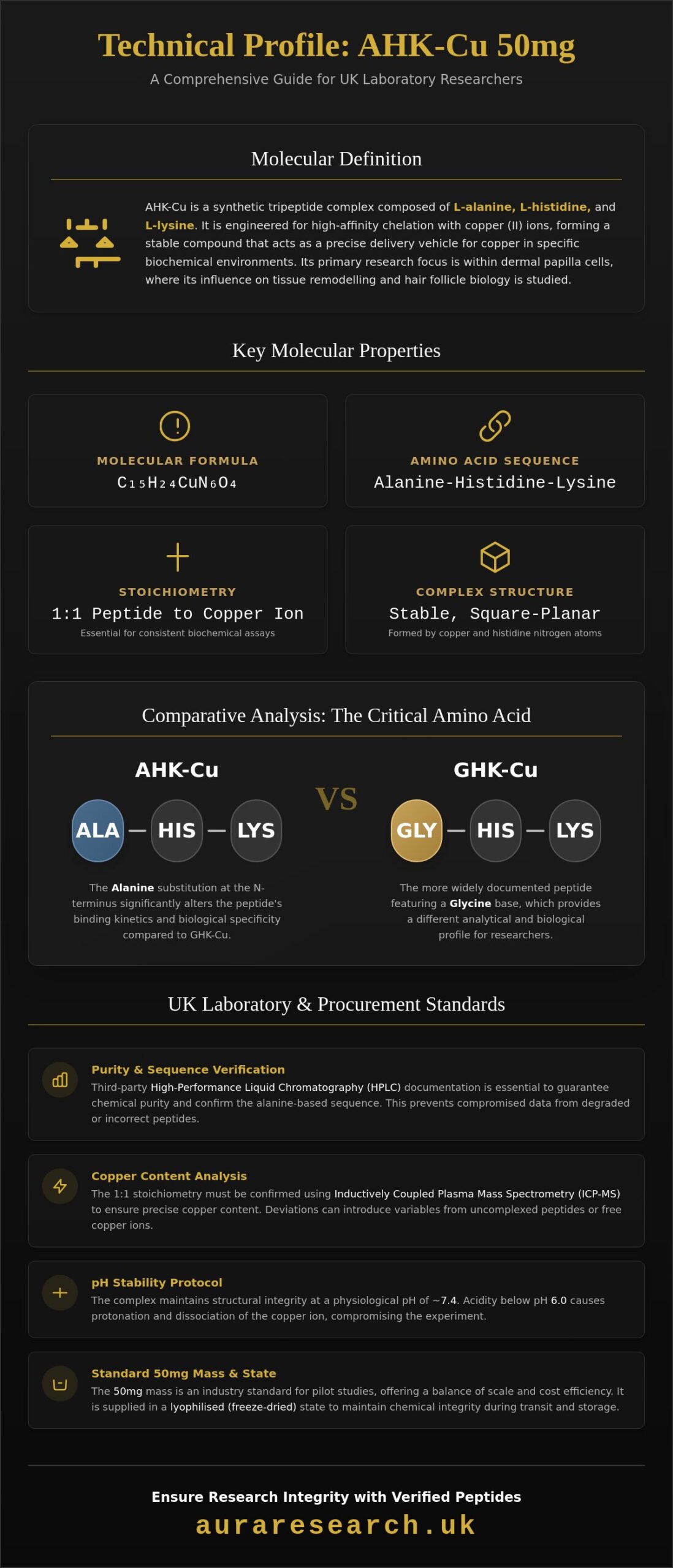
AHK-Cu, also known as Copper Tripeptide-3, represents a specific class of synthetic peptides designed for high-affinity chelation with divalent copper cations. This tripeptide complex consists of L-alanine, L-histidine, and L-lysine. It’s a compound engineered with precision to facilitate biochemical interactions within specific cellular environments. Most modern AHK-Cu 50mg research focuses on its activity within dermal papilla cells; this is where its influence on tissue remodelling and hair follicle biology is most pronounced. Distinguishing AHK-Cu from other copper-binding agents is vital for experimental integrity. Whilst it shares structural similarities with the more widely documented Copper peptide GHK-Cu, the substitution of alanine for glycine at the N-terminus alters its binding kinetics and biological specificity. This subtle change in the amino acid sequence dictates the unique analytical profile of the molecule.
Chemical Structure and Sequence
The Alanine-Histidine-Lysine (AHK) sequence is the foundation of this molecule’s functionality. Within this arrangement, the Histidine residue plays a critical role. It provides the necessary nitrogen atoms to coordinate with the copper (II) ion, forming a stable heterocyclic ring structure. This chelation process is what allows the peptide to act as a delivery vehicle for copper. For laboratory verification, the molecular formula is established as C15H24CuN6O4. Researchers must confirm this molecular weight against High-Performance Liquid Chromatography (HPLC) standards to ensure the peptide hasn’t degraded or been synthesised with incorrect amino acid precursors. Stoichiometric precision is required to maintain the 1:1 ratio of peptide to copper ion, which is essential for consistent results in biochemical assays.
Significance of the 50mg Concentration
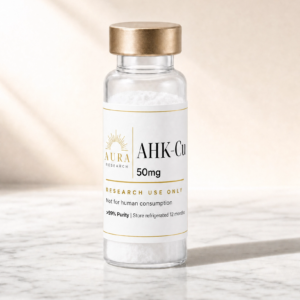
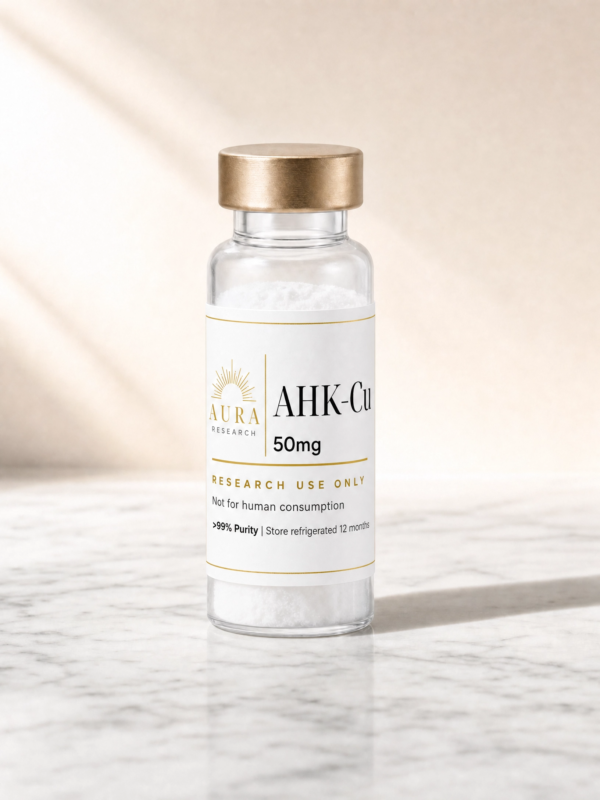
The 50mg mass serves as a practical industry standard for controlled laboratory pilot studies. This specific quantity offers the ideal balance between experimental scale and cost efficiency. It’s particularly useful for UK institutions conducting initial dose-response assays where serial dilution is required. Precise weighing of 50mg vials allows for the creation of accurate stock solutions without the waste associated with larger quantities. Because AHK-Cu 50mg research often involves delicate biochemical pathways, maintaining this exact mass is essential for statistical reliability. The compound is typically provided in a lyophilised (freeze-dried) state. This state maintains the chemical integrity of the peptide during transit and storage. Handling this specific mass requires analytical balances with high sensitivity to ensure the molarity of the final solution remains consistent across multiple test groups.
Structural Analysis and Copper-Binding Affinity of AHK-Cu
The chelation process in AHK-Cu involves the coordination of a copper (II) ion with the nitrogen atoms of the peptide backbone and the histidine imidazole side chain. This interaction creates a stable, square-planar complex. Maintaining a 1:1 stoichiometry is essential. If the copper concentration deviates, the resulting solution may contain uncomplexed peptide or free copper ions. Both scenarios introduce variables that can skew experimental data. Verification of this ratio is typically achieved through Inductively Coupled Plasma Mass Spectrometry (ICP-MS) to ensure the precise copper content matches the theoretical yield of the 50mg vial. Accurate AHK-Cu 50mg research depends entirely on this chemical balance.
Stability constants for AHK-Cu are highly dependent on the pH of the laboratory environment. At a physiological pH of approximately 7.4, the complex remains robust and maintains its structural integrity. However, as acidity increases and the pH drops below 6.0, protonation of the histidine residue occurs. This transition leads to the dissociation of the copper ion from the peptide ligand. Researchers must monitor these levels closely during experimental procedures to prevent premature degradation of the complex. The concentration of the copper ion itself also influences stability; an excess of copper can lead to the formation of secondary complexes that alter the peptide’s biochemical behaviour.
Molecular Interaction with Dermal Models
Research involving dermal papilla models highlights the peptide’s role in modulating specific growth factors. In vitro studies have demonstrated that AHK-Cu can influence the expression of Vascular Endothelial Growth Factor (VEGF). This is a primary marker for nutrient delivery in follicular environments. Whilst the Regenerative and Protective Actions of the GHK-Cu Peptide are often used as a baseline for comparison, AHK-Cu shows specific affinity for fibroblast-rich dermal layers. This makes it a unique candidate for collagen synthesis research. Investigators requiring verified compounds for these assays often source through specialised UK laboratory suppliers to ensure stoichiometric accuracy.
Stability and Degradation Pathways
External factors such as UV light and thermal fluctuations rapidly compromise the structural integrity of aqueous AHK-Cu solutions. Exposure to light can trigger photo-oxidation of the amino acid residues, particularly at the histidine site. For this reason, stock solutions should be stored in amber vials at temperatures between 2°C and 8°C. Under standard temperature and pressure (STP), the degradation half-life of AHK-Cu in aqueous solution is estimated to be approximately 60 hours. Maintaining these conditions is vital for the reproducibility of AHK-Cu 50mg research outcomes.
Comparative Research: AHK-Cu vs. GHK-Cu Analytical Profiles
The structural divergence between AHK-Cu and GHK-Cu is defined by a single amino acid substitution at the N-terminus. AHK-Cu utilises L-alanine, whereas GHK-Cu employs glycine. This substitution isn’t merely aesthetic. It significantly alters the molecular weight and the resulting molar concentration of the solution. When conducting AHK-Cu 50mg research, investigators must adjust their calculations to account for the increased mass of the alanine methyl group. A 50mg vial of AHK-Cu contains fewer moles of peptide than an equivalent mass of GHK-Cu. Failing to account for this difference leads to inconsistent dosage across comparative studies and compromises the validity of the data.
Competitive chelation assays reveal that whilst both peptides exhibit high affinity for copper (II) ions, their binding constants aren’t identical. The alanine residue in AHK-Cu provides a slightly different electronic environment for the copper-binding site compared to glycine. For a foundational understanding of these dynamics, researchers often consult this in-depth review of the biological actions of GHK-Cu. Understanding GHK-Cu’s binding kinetics allows for a more precise calibration of AHK-Cu assays. It’s the difference between broad-spectrum activity and targeted molecular interaction. Precision in these assays is the only way to ensure reproducible results in a laboratory setting.
Targeted Research Applications
AHK-Cu is primarily distinguished by its specificity for hair follicle dermal papilla cells. In contrast, GHK-Cu remains the standard for systemic tissue remodelling and broad anti-inflammatory research. This divergence dictates the selection of the compound based on the intended experimental model. Some protocols explore the synergistic potential of using both peptides within a broader Regenerative Research Protocol. This approach allows for the simultaneous analysis of localised follicular activity and general dermal health. It’s a methodical way to expand the scope of AHK-Cu 50mg research without losing focus on specific cellular markers.
Solubility and Reconstitution Variations
Solubility profiles vary between the two complexes. AHK-Cu typically exhibits high solubility in both bacteriostatic water and sterile saline, though pH sensitivity remains a critical variable. Reconstituting AHK-Cu requires a steady hand to avoid rapid pH shifts that could destabilise the copper bond. In contrast, GHK-Cu is often more resilient to minor fluctuations. Both peptides should be stored in their lyophilised form at -20°C for long-term stability. Once reconstituted, their shelf life is significantly reduced. Immediate use or strictly controlled refrigerated storage is mandatory to prevent peptide cleavage or copper dissociation. Adhering to these storage standards is the only way to maintain chemical integrity.
Standard Operating Procedures for AHK-Cu Laboratory Handling
Precision in laboratory handling is as vital as the chemical purity of the compound itself. Contamination or mechanical stress can invalidate weeks of data. Establishing a sterile environment is the first prerequisite for reliable AHK-Cu 50mg research. All procedures should ideally occur within a laminar flow hood using aseptic techniques. This prevents the introduction of microbial agents that could degrade the peptide or interfere with sensitive cellular assays. Investigators must also calculate precise molar concentrations before beginning. Using the molecular weight established in earlier sections, researchers should determine the exact volume of solvent required to reach their target concentration for stock solutions.
Stability management is equally critical. Lyophilised AHK-Cu is highly stable when stored correctly. For long-term preservation, vials must be kept in ultra-low temperature storage, typically between -20°C and -80°C. This prevents the gradual hydrolysis and oxidation that can occur even in a vacuum-sealed environment. Once a vial is brought to room temperature for reconstitution, it shouldn’t be returned to deep-freeze storage repeatedly. This freeze-thaw cycle can compromise the structural integrity of the copper-peptide complex. Investigators can acquire AHK-Cu (50mg) with verified purity standards to ensure experimental consistency from the outset.
Reconstitution and Dilution Methodology
The introduction of a solvent to a vacuum-sealed vial requires a methodical approach. The solvent should be injected slowly against the side of the glass vial rather than directly onto the lyophilised cake. This minimises the risk of foaming and mechanical stress. Regarding the “swirl vs shake” debate, AHK-Cu is sensitive to shearing forces. Shaking the vial can lead to peptide aggregation or the disruption of the copper-binding site. A gentle swirling motion is the only recommended method for achieving a clear, homogenous solution. For a standard 50mg vial, the optimal volume of solvent for a baseline stock solution is typically 2ml to 5ml of bacteriostatic water or sterile saline.
Verification of Purity via HPLC and MS
Analytical verification is the final safeguard of research integrity. High-Performance Liquid Chromatography (HPLC) is used to determine the purity of the batch. A high-quality chromatogram should display a single, sharp peak with minimal “noise” or secondary peaks that would indicate impurities. Mass Spectrometry (MS) then confirms the molecular identity by verifying the exact mass-to-charge ratio of the molecule. Every batch utilised in AHK-Cu 50mg research must be accompanied by a third-party Certificate of Analysis (CoA). This document serves as the definitive record of the peptide’s sequence, purity, and copper content. Relying on unverified compounds introduces unacceptable risk to the experimental framework.
Procurement Standards for High-Purity AHK-Cu (50mg) in the UK
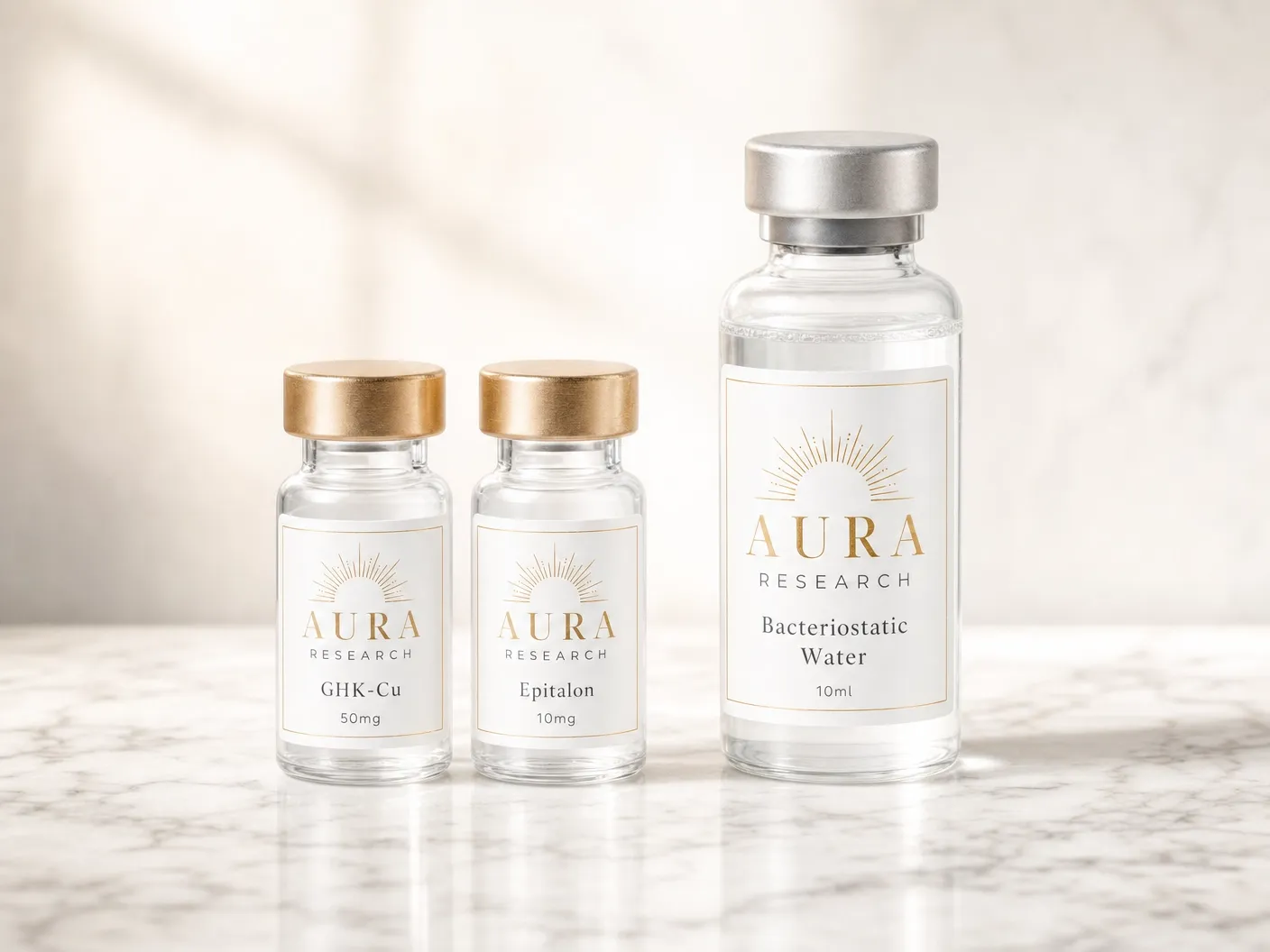
Procuring high-purity compounds within the United Kingdom requires a rigorous vetting process. The integrity of AHK-Cu 50mg research depends entirely on the transparency of the supply chain. Reliable UK suppliers must provide more than just a product; they must offer a comprehensive analytical framework. This includes verifiable data regarding the compound’s synthesis and subsequent purification. When selecting a partner for laboratory supplies, investigators should prioritise entities that demonstrate a profound understanding of biochemical nomenclature and stoichiometric precision. A failure in procurement is a failure in methodology. Aura Research maintains a commitment to HPLC-verified purity and scientific transparency, ensuring that every vial meets the exacting standards required for sophisticated molecular analysis.
The “Research Use Only” designation is a critical legal and ethical boundary in the UK. Under the Human Medicines Regulations 2012, the Medicines and Healthcare products Regulatory Agency (MHRA) maintains strict oversight of chemical compounds. These substances are not for human consumption or therapeutic use. Compliance with these regulations is mandatory for both the supplier and the institution. Furthermore, the UK Online Safety Act requires stricter compliance for the sale of research chemicals, including age verification protocols. Adhering to these standards isn’t merely a legal necessity. It’s a core component of professional scientific conduct.
Interpreting the Certificate of Analysis (CoA)
A Certificate of Analysis is the definitive record of a batch’s chemical integrity. Researchers must look beyond the headline purity percentage. A high-quality CoA identifies specific impurity peaks and provides a clear High-Performance Liquid Chromatography (HPLC) chromatogram. It’s essential to cross-reference batch numbers on the vial with the corresponding analytical reports to ensure data continuity. A comprehensive panel should also include testing for heavy metals and microbial limits. If a supplier cannot provide this level of granular detail, the compound’s suitability for AHK-Cu 50mg research is compromised. Transparency in these metrics is the only way to eliminate variables related to batch-to-batch inconsistency.
Ethical and Regulatory Compliance
The responsibility for maintaining laboratory-only use rests with the individual researcher and their parent institution. Documentation requirements for institutional research audits are becoming increasingly stringent. Investigators must maintain a clear paper trail of procurement, storage, and disposal. Aura Research prioritises educational transparency for the UK scientific community by providing the technical context necessary for these audits. This approach supports a culture of responsibility and caution. By acting as a meticulous mentor in the procurement process, we ensure that the focus remains on the integrity of the data and the safety of the laboratory environment.
Advancing Analytical Precision in Peptide Research
The success of any biochemical assay depends on the absolute integrity of the starting material. We’ve examined how stoichiometric precision and rigorous pH management define the stability of the alanine-histidine-lysine complex. Maintaining these standards is the only way to ensure that AHK-Cu 50mg research produces reproducible and statistically significant data. Every step, from the initial reconstitution to ultra-low temperature storage, serves as a safeguard against molecular degradation and experimental bias. Professional methodology requires this level of attention to detail.
Transparency in the supply chain isn’t a luxury; it’s a foundational requirement for the UK scientific community. Researchers must demand verifiable evidence of purity and identity for every batch. Aura Research provides this certainty by ensuring every batch is HPLC and MS verified. Our compounds are third-party tested for absolute transparency and supplied with a comprehensive Certificate of Analysis. This level of scrutiny eliminates the risks associated with batch inconsistency and heavy metal contamination.
Order HPLC-Verified AHK-Cu (50mg) for Laboratory Research to establish a benchmark of quality in your next study. We’re committed to supporting your pursuit of precise and ethical scientific discovery through technical excellence.
Frequently Asked Questions
What is the primary difference between AHK-Cu and GHK-Cu in research?
The primary difference lies in the N-terminal amino acid sequence. AHK-Cu utilises L-alanine; GHK-Cu employs glycine. This substitution changes the peptide’s binding affinity and biological target. Whilst GHK-Cu is used for general tissue repair, AHK-Cu 50mg research is specifically targeted toward dermal papilla cells within hair follicle models.
How should AHK-Cu 50mg be stored to maintain maximum stability?
Stability is maintained by storing the lyophilised powder at temperatures between -20°C and -80°C. This prevents hydrolysis and oxidation of the peptide chain. Once reconstituted, the solution must be kept in an amber vial at 2°C to 8°C. Exposure to light and room temperature significantly accelerates the degradation of the copper-peptide complex.
What solvent is recommended for the reconstitution of AHK-Cu?
Bacteriostatic water or sterile saline (0.9% NaCl) are the standard solvents for reconstitution. The choice depends on the specific requirements of the experimental assay and the desired pH stability. Solvents should be introduced slowly to avoid mechanical stress. A gentle swirling motion ensures a homogenous solution without compromising the delicate copper-binding site.
Is AHK-Cu 50mg suitable for in vivo studies?
No; this compound is designated strictly for laboratory research use only. It is not approved for human therapeutic use or in vivo clinical trials. Researchers must adhere to UK regulatory standards and institutional ethics board guidelines. Any application outside of a controlled laboratory environment violates the “Research Use Only” designation and MHRA compliance.
How can I verify the purity of my AHK-Cu batch?
Verification requires High-Performance Liquid Chromatography (HPLC) and Mass Spectrometry (MS) data. A third-party Certificate of Analysis (CoA) should accompany every batch to confirm these results. The HPLC chromatogram must show a purity level of 98% or higher with a single, clear peak. Mass Spectrometry confirms the molecular identity by verifying the exact mass of the AHK-Cu complex.
What are the common impurities found in low-grade AHK-Cu?
Low-grade batches often contain residual solvents or truncated peptide sequences. Heavy metals such as lead or arsenic are also potential contaminants in poorly synthesised products. Trifluoroacetic acid (TFA) salts are common byproducts that must be removed through secondary purification. These impurities can interfere with cellular signalling and invalidate AHK-Cu 50mg research outcomes.
Can AHK-Cu be combined with other peptides in a single research protocol?
AHK-Cu can be integrated into multi-peptide protocols if the stoichiometric balance is maintained. Many investigators use it alongside GHK-Cu or other regenerative agents in structured research kits. However, each peptide’s specific pH sensitivity and binding constants must be considered. Combining compounds in a single solution requires careful monitoring to prevent competitive chelation or peptide-peptide interactions.
What is the shelf life of lyophilised AHK-Cu at room temperature?
Lyophilised AHK-Cu remains stable at room temperature for approximately four weeks. This period is sufficient for transit but is not recommended for long-term storage. Once the peptide is reconstituted into an aqueous solution, its shelf life at room temperature drops to less than 48 hours. Deep-freeze storage is the only way to ensure chemical integrity over several months.
Keep diving into the benefits of research peptides
The Aura Academy is our free educational hub for anyone who wants to understand the science of human optimisation properly. Every article is written by researchers and reviewed for accuracy. Every claim is cited. And everything is honest about what the evidence shows — and what it doesn’t.
Access to the Aura Academy is completely free for all Aura Research customers. Simply, place an order for your research peptides from our safe, secure, discreet online store, and you will automatically receive complimentary access to the Academy.