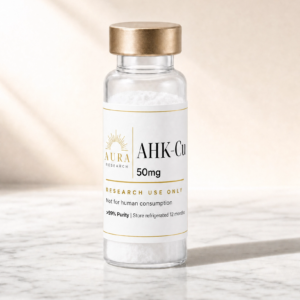
If you have spent any time looking into modern skincare, hair restoration, or healthy aging, you have almost certainly run into a compound called GHK-Cu. Often referred to simply as “copper peptides,” this molecule has earned a massive reputation in the scientific and beauty communities alike. Many call it the ultimate cellular reset, while others view it as the gold standard for natural skin remodeling.
But behind the flashy product labels and social media enthusiasm, there is a fascinating fifty-year scientific history [1]. Today, we are going to look past the marketing buzzwords and explain exactly what is GHK-Cu in simple, clear, and easy-to-understand terms. We will break down how this tiny messenger works, what the clinical studies actually show, and why its natural decline in your body matters so much.
What is GHK-Cu in Simple Terms?
To understand what is GHK-Cu, let us start by breaking down its scientific name.
The letters GHK stand for three specific amino acids connected in a short chain: Glycine, L-Histidine, and L-Lysine. In the scientific world, a three-amino-acid chain is called a tripeptide.
The Cu is the chemical symbol for copper. This is because the GHK tripeptide has an incredibly strong natural attraction to copper [2]. When you mix them together, they lock onto each other to form a stable complex called GHK-Cu, or copper tripeptide-1.
Unlike synthetic chemicals created entirely from scratch, GHK-Cu is a completely natural molecule that your body already makes. It was first discovered in 1973 by a researcher named Dr. Loren Pickart [1]. He was studying human blood plasma and noticed that when he added plasma from young individuals to older liver tissue, the older tissue began producing proteins and behaving like much younger tissue. He isolated the exact molecule responsible for this youthful “reset” and found it was GHK-Cu.
The Age Decline: Why We Lose Our Natural Reset
Your body naturally produces GHK-Cu and releases it into your blood plasma, saliva, and urine whenever you experience an injury [1]. It acts as an immediate first-responder signal to kickstart the healing process.
However, just like many other vital youthful compounds, your natural levels of GHK-Cu drop dramatically as you get older.
At age 20, you have a healthy abundance of GHK-Cu floating through your system, measuring around 200 nanograms per millilitre (ng/mL) in your plasma [1]. By the time you reach age 60, this concentration drops by more than half, falling to just 80 ng/mL [1].
This steep decline is one of the primary reasons why your skin takes longer to heal, loses its thickness, and struggles to produce fresh collagen and elastin as you age. By studying synthetic GHK-Cu in laboratory settings, researchers are trying to understand if we can resupply this messenger to help older cells behave like young ones again.
How Does GHK-Cu Work in the Lab?
In our previous guide on how do peptides work, we explained the “lock and key” method of cellular communication. GHK-Cu is a perfect example of this system in action, but it does its job through a few unique and powerful pathways.
1. The Copper Escort Service
Copper is an essential trace mineral that your cells absolutely need to perform vital tasks, such as building tissue and neutralizing free radicals. However, free copper cannot easily enter your cells on its own. GHK acts like a highly efficient, private escort. It binds to the copper, guides it safely through the body, and delivers it directly inside the cells that need it most [2].
2. The Master Collagen Regulator
In laboratory studies, GHK-Cu does something much smarter than traditional cosmetic ingredients. Many anti-aging products simply force your skin to make more collagen, which can sometimes lead to stiff, irregular scar tissue. GHK-Cu is a regulator [3]. It tells your cells to build fresh collagen and elastin, but it also modulates the enzymes that break down old, damaged proteins. This dual action ensures that your tissue remodels itself smoothly, cleanly, and correctly.
3. The Genetic Software Update
The most mind-blowing discovery about GHK-Cu has come from modern gene-mapping technology. Researchers at the Broad Institute of MIT and Harvard analyzed how GHK-Cu affects human DNA. They discovered that this tiny peptide is capable of up-regulating (turning on) or down-regulating (turning off) over 4,000 human genes [4]. Essentially, it acts like a software update for your cells, flipping the switches on genes related to DNA repair, antioxidant defense, and tissue regeneration back to a healthier, more youthful state.
What Does the Research Say About GHK-Cu?
Because it has been studied for over five decades, GHK-Cu has an incredibly rich body of scientific evidence behind it. Researchers focus on three primary areas of study:
Skin Remodeling and Anti-Aging
In human clinical trials, topical GHK-Cu has shown remarkable results for aging skin. Multiple double-blind studies have demonstrated that creams containing GHK-Cu significantly increase skin density and thickness, reduce the depth of wrinkles, and improve overall skin elasticity [5]. In fact, one study compared a copper peptide cream directly against vitamin C and retinoic acid. GHK-Cu strongly outperformed both of them, stimulating new collagen production in 70% of the female participants, compared to only 50% for vitamin C and 40% for retinoic acid [6].
Hair Follicle Stimulation
Beyond skincare, GHK-Cu is heavily studied for its ability to address hair thinning. In hair research models, copper peptides have been shown to enlarge hair follicle size, stimulate the growth of new hair, and extend the active growth phase (anagen phase) of the hair cycle [1]. It does this by boosting blood flow to the scalp and encouraging the health of the dermal papilla cells at the base of your hair follicles.
Wound Healing and Tissue Repair
Because GHK-Cu is naturally released during injuries, scientists have tested its healing properties in various animal and tissue models. When applied to experimental wounds, it has been shown to accelerate wound contraction, promote the growth of new blood vessels, and dramatically increase antioxidant enzymes to protect the healing tissue from oxidative stress [7].
| Research Area | What Studies Show | Key Mechanism |
| Skin Anti-Aging | Increased thickness, reduced wrinkles, better elasticity | Stimulates collagen, elastin, and decorin |
| Hair Growth | Enlarged follicles, reduced thinning, longer growth phase | Boosts scalp blood flow and dermal papilla health |
| Wound Healing | Faster skin repair, healthier tissue remodeling | Regulates tissue metalloproteinases and antioxidants |
| Gene Regulation | Resets over 4,000 genes to a healthier state | Epigenetic modulation of cellular pathways |
Why Purity is Crucial for GHK-Cu Research
If you are looking to study GHK-Cu in a laboratory setting, there is one critical factor you must keep in mind: the compound’s purity and format.
GHK-Cu is an incredibly delicate tripeptide. In its raw form, it is highly sensitive to breakdown by enzymes in the environment. If you purchase pre-mixed liquid copper peptides, they can degrade rapidly during transit and lose their biological activity before they ever reach your lab.
Furthermore, because GHK-Cu works by directly interacting with cellular receptors and genetic pathways, any impurities in your research powder can completely ruin your study. Contaminants can block receptors, trigger unwanted inflammatory responses, or lead to inaccurate data.
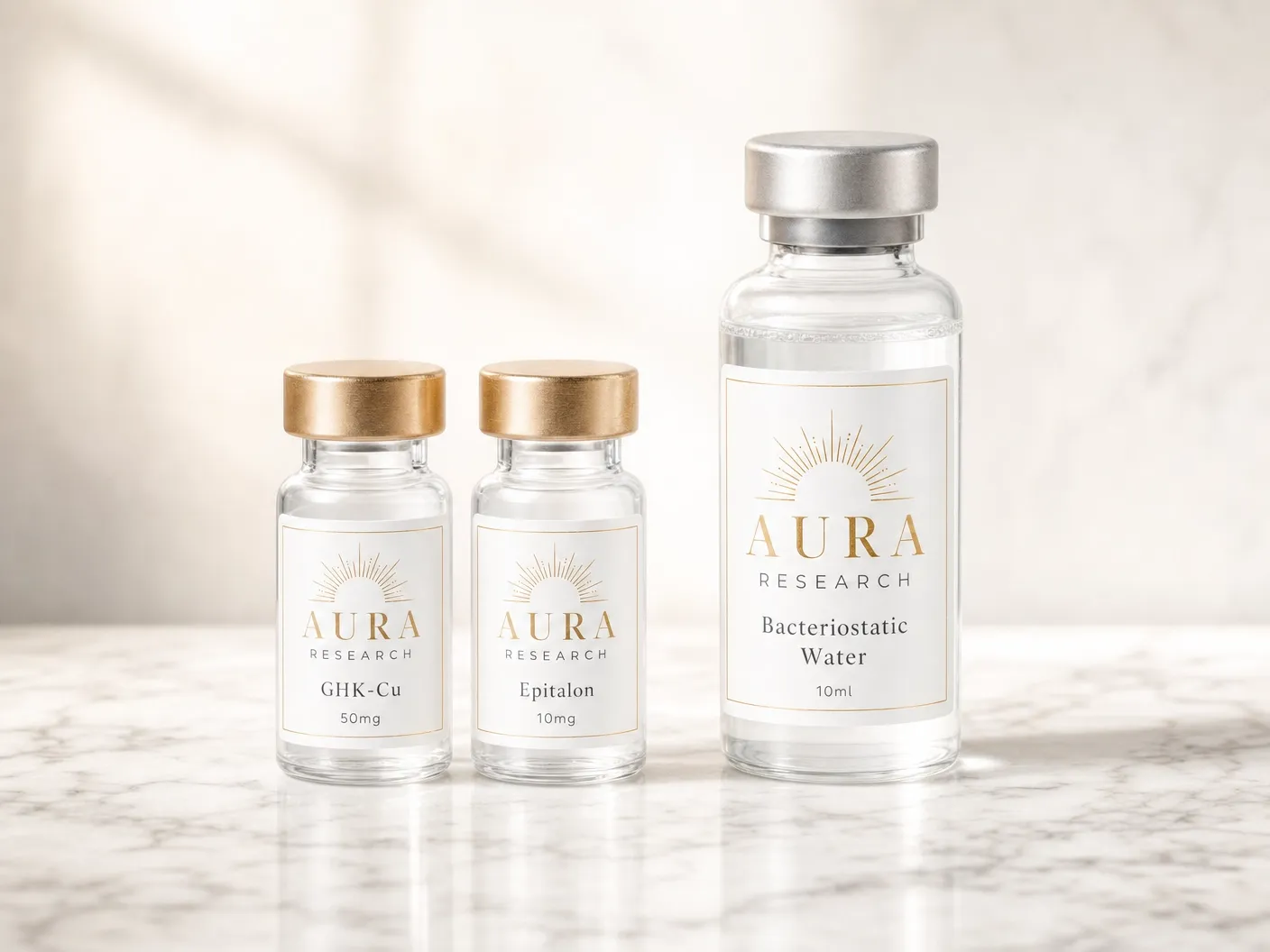
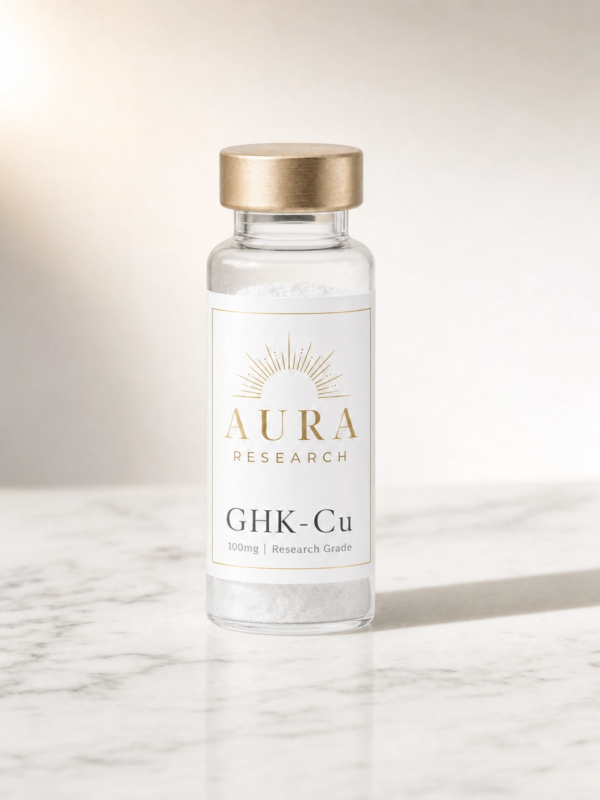
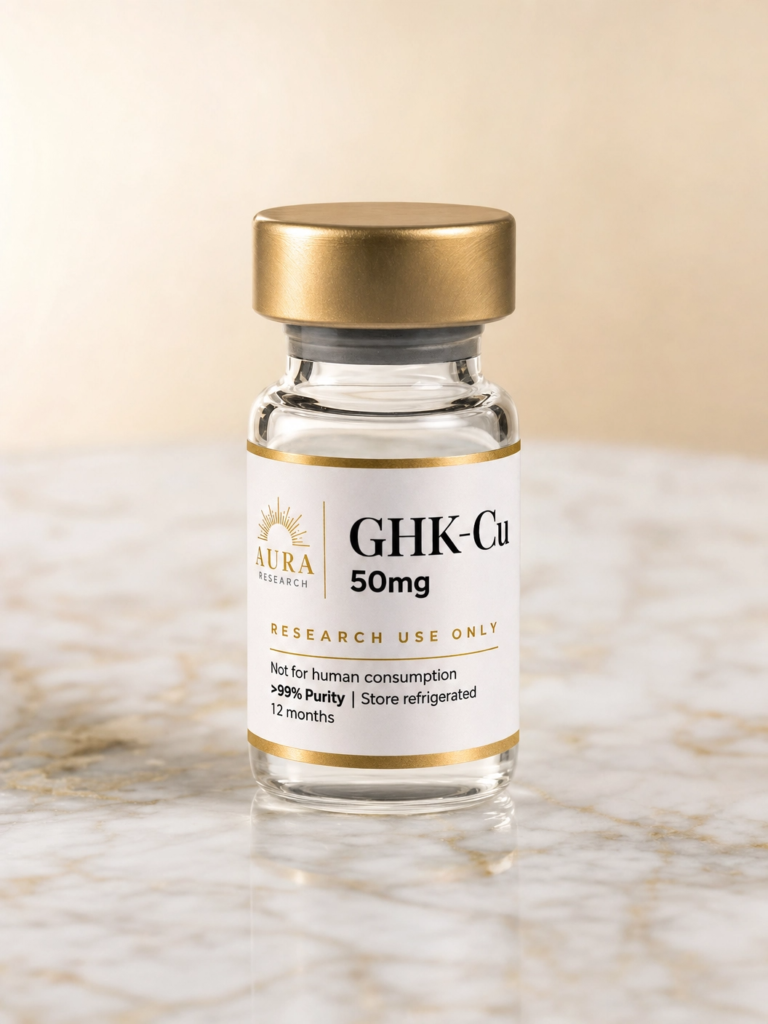
As we emphasized in our peptide safety guide, you should always insist on sourcing HPLC-verified, lyophilized (freeze-dried) GHK-Cu powder with a certified purity of over 99%. Keeping the peptide in a dry, sterile glass vial ensures it remains completely stable and active until you are ready to reconstitute it for your research.
Summary: The Power of GHK-Cu
To wrap up, let us review the simple facts about GHK-Cu.
GHK-Cu stands for Glycyl-L-Histidyl-L-Lysine bound to a copper ion. It is a naturally occurring peptide that drops by over 50% in your body between the ages of 20 and 60 [1]. In laboratory and clinical studies, it has proven to be a master regulator of tissue repair, showing impressive results for skin thickening, wrinkle reduction, hair follicle stimulation, and wound healing. It achieves these diverse effects by acting as a genetic regulator, resetting thousands of genes to a healthier state [4].
We hope this guide helped you understand the real, proven science behind the copper peptide revolution. If you want to explore the specific research protocols or molecular mechanisms of other popular compounds, head over to the Aura Academy for our full collection of educational guides.
References
1.Pickart, L., & Margolina, A. (2018). Regenerative and Protective Actions of the GHK-Cu Peptide in the Light of the New Gene Data. International Journal of Molecular Sciences, 19(7), 1987. https://pmc.ncbi.nlm.nih.gov/articles/PMC6073405/
2.Pickart, L., Vasquez-Soltero, J. M., & Margolina, A. (2015). GHK Peptide as a Natural Modulator of Multiple Cellular Pathways in Skin Regeneration. BioMed Research International, 2015, 648108. https://pmc.ncbi.nlm.nih.gov/articles/PMC4508379/
3.Maquart, F. X., Bellon, G., Chaqour, B., Wegrowski, Y., Patt, L. M., & Borel, J. P. (1999). In vivo stimulation of connective tissue accumulation by the tripeptide-copper complex glycyl-L-histidyl-L-lysine-copper(II) in rat experimental wounds. Journal of Clinical Investigation, 92(5), 2368-2376.
4.Pickart, L. (2014). GHK and DNA: Resetting the Human Genome to Health. Journal of Aging Research & Clinical Practice, 3(4), 200-210. https://pmc.ncbi.nlm.nih.gov/articles/PMC4180391/
5.Leyden, J., Stephens, T., Finkey, M. B., Appa, Y., & Barkovic, S. (2002). Skin benefits of copper peptide containing facial cream. American Academy of Dermatology Meeting, New York.
6.Abdulghani, A. A., Sherr, A., Shirin, S., Solodkina, G., Tapia, E. M., Wolf, B., & Gottlieb, A. B. (1998). Effects of topical creams containing vitamin C, a copper-binding peptide, and melatonin on ultratructural features of human skin. Journal of Cosmetic Dermatology, 16(4), 115-121.
7.Gruchlik, A., Jurkiewicz, M., Dominiak, I., Przylas, M., & Chodurek, E. (2012). Effect of Gly-His-Lys-Cu2+ on metalloproteinase activity and collagen synthesis in ischemic open wounds. Pharmacological Reports, 64(2), 345-352.