If you have ever dealt with a stubborn sports injury, a chronic joint issue, or a muscle strain that simply refused to heal, you know how incredibly frustrating the recovery process can be. You try the rest, the ice, and the physical therapy, but sometimes your body just seems to lack the biological spark it needs to rebuild. For this reason, we now answer the question: What is TB-500?
It is during these frustrating moments that many researchers and active individuals begin looking into the cutting edge of regenerative science. If you have spent any time in these circles, you have almost certainly heard of a peptide called TB-500. Frequently studied alongside BPC-157, TB-500 has earned a massive reputation in the scientific community as a master coordinator of tissue repair and cellular migration.
But what is the actual biology behind the online excitement? Today, we are going to look past the locker-room rumours and explain exactly what is TB-500 in simple, clear, and easy-to-understand terms. We will break down how it relates to a natural protein in your body, how it works at a cellular level, and what the latest scientific studies actually show.
What is TB-500 in Simple Terms?
To understand what is TB-500, we first need to talk about a natural protein that your body already makes, called Thymosin Beta-4 (often written as Tβ4 or TB4) [1].
Thymosin Beta-4 is a relatively large, hormone-like protein made up of 43 amino acids [1]. It is produced by your thymus gland—a small gland located behind your breastbone that plays a major role in your immune system [1]. This natural protein is found in high concentrations throughout your body, especially in your platelets, white blood cells, and in the fluid that rushes to a fresh wound [1]. Its primary job is to help your cells move, divide, and repair themselves after you experience physical trauma.
However, producing the full, 43-amino-acid Thymosin Beta-4 protein in a laboratory is highly complex, incredibly expensive, and chemically unstable.
To solve this problem, scientists analyzed the structure of Thymosin Beta-4 to find the exact “active site” responsible for its healing powers. They discovered that a tiny, seven-amino-acid segment of the protein carried the vast majority of its tissue-repairing and cell-migrating abilities [1].
The researchers isolated this specific segment (scientifically known as the Ac-LKKTETQ sequence) and synthesized it [1]. That short, highly stable, and incredibly targeted synthetic fragment is what we now call TB-500 [1].
TB-500 vs. Thymosin Beta-4: What is the Difference?
Because these two terms are often used interchangeably online, it is very easy to get them mixed up. However, they are not exactly the same thing.
Think of Thymosin Beta-4 as a massive, heavy-duty multi-tool. It has dozens of different functions, some of which are involved in your immune system, while others are involved in cellular structure.
TB-500 is like isolating just the high-powered screwdriver from that multi-tool. Because it is much smaller (only 7 amino acids compared to 43), it can bypass biological barriers more easily, has better stability, and focuses entirely on the specific pathways responsible for tissue repair and cell migration [1].
| Feature | Thymosin Beta-4 (Tβ4) | TB-500 |
| Origin | Naturally occurring protein made by the thymus | Synthetic peptide fragment |
| Size | Large (43 amino acids) | Very small (7 amino acids) |
| Primary Focus | Broad immune, structural, and cellular functions | Targeted tissue repair and cell migration |
| Bioavailability | Lower (easily broken down by enzymes) | Higher (smaller size and chemically stabilized) |
How Does TB-500 Work in the Lab?
In our previous guides, we discussed how peptides act as cellular messengers. When introduced into a research model, TB-500 delivers highly specific instructions to your cells through several fascinating biological pathways.
1. The G-Actin Buffer System
Every cell in your body has an internal skeleton, called a cytoskeleton, which allows the cell to hold its shape, divide, and move. This skeleton is built from a protein called actin [2]. Actin exists in two states: G-actin (free-floating blocks) and F-actin (the assembled skeleton) [2].
TB-500 acts as the ultimate manager of this system. It binds to the free-floating G-actin blocks, preventing them from assembling prematurely [2]. When a cell needs to move to repair an injury, TB-500 releases the blocks at the exact right moment, driving rapid cell migration and movement [2]. This is why TB-500 is so famous for helping cells “travel” to the site of an injury to begin the rebuilding process.
2. Angiogenesis (Growing New Blood Lines)
Your tissues cannot heal without a steady supply of oxygen and nutrients. When a muscle, tendon, or ligament is damaged, the blood supply is often cut off. TB-500 stimulates a process called angiogenesis, which is the growth of brand-new blood vessels from existing ones [1]. By laying down these new “supply lines,” the peptide ensures that the injured area receives the vital resources it needs to heal quickly.
3. Calming the Inflammatory Fire
Chronic inflammation is the enemy of recovery. It causes pain, stiffness, and can lead to the formation of stiff, useless scar tissue (fibrosis) [3]. TB-500 has been shown to downregulate a major inflammatory pathway called NF-κB [2]. By calming this genetic pathway, the peptide helps reduce chronic swelling and stiffness, allowing the tissue to rebuild with clean, flexible fibers rather than thick, restrictive scars.
What Does the Research Say About TB-500?
While the cellular biology is incredibly elegant, what do the actual scientific studies show? Because TB-500 is a synthetic fragment of Thymosin Beta-4, researchers look closely at both the parent molecule and the fragment in various injury models.
Muscle and Tendon Repair
Tendons and ligaments have notoriously poor blood flow, which is why they usually take months or even years to heal naturally. In animal models of musculoskeletal trauma, researchers have found that administering Thymosin Beta-4 and its active fragments significantly accelerates the healing of torn tendons and muscle strains [3]. The peptide encourages tenocytes (tendon cells) and myoblasts (muscle stem cells) to multiply and migrate directly into the tear, speeding up structural recovery [4].
Cardiac Protection and Repair
One of the most exciting and prestigious areas of Thymosin Beta-4 research is in cardiology. During a heart attack, heart muscle cells are starved of oxygen and die, leaving behind stiff scar tissue that weakens the heart. In clinical trials, researchers have used Thymosin Beta-4 to “prime” stem cells in patients recovering from acute heart attacks [3]. The studies showed improved cardiac function, better exercise capacity, and a significant reduction in damaged scar tissue, proving that the peptide has genuine regenerative potential in highly complex organs [3].
Corneal and Eye Healing
Some of the most successful human clinical trials on Thymosin Beta-4 have been conducted in ophthalmology. In phase 2 randomized, double-blind human trials, patients suffering from severe dry eye disease or corneal injuries were treated with Thymosin Beta-4 eye drops [5]. The results were highly impressive, showing a 35% reduction in ocular discomfort and a 59% reduction in corneal staining (healing of the eye surface) compared to the placebo group [5].
Sourcing and Purity: A Scientific Necessity
If you are a researcher looking to study this peptide, you must understand that this peptide is exceptionally delicate.
Because it is a tiny, seven-amino-acid chain, it is highly vulnerable to environmental enzymes if it is kept in a liquid state. Pre-mixed liquid peptides sold online can degrade rapidly during shipping, leaving you with a completely inactive compound by the time it arrives at your laboratory.
Furthermore, as we detailed in our guide on peptide safety, the quality of your research compound dictates the quality of your results. If a peptide powder contains impurities or bacterial endotoxins from a low-quality manufacturing facility, those contaminants can cause severe inflammatory reactions in your research models, completely skewing your data.
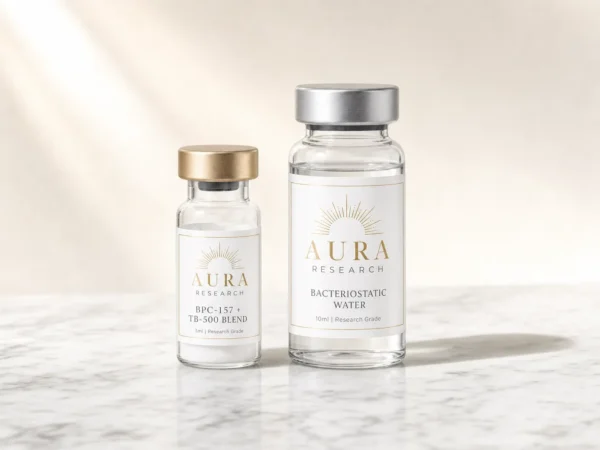
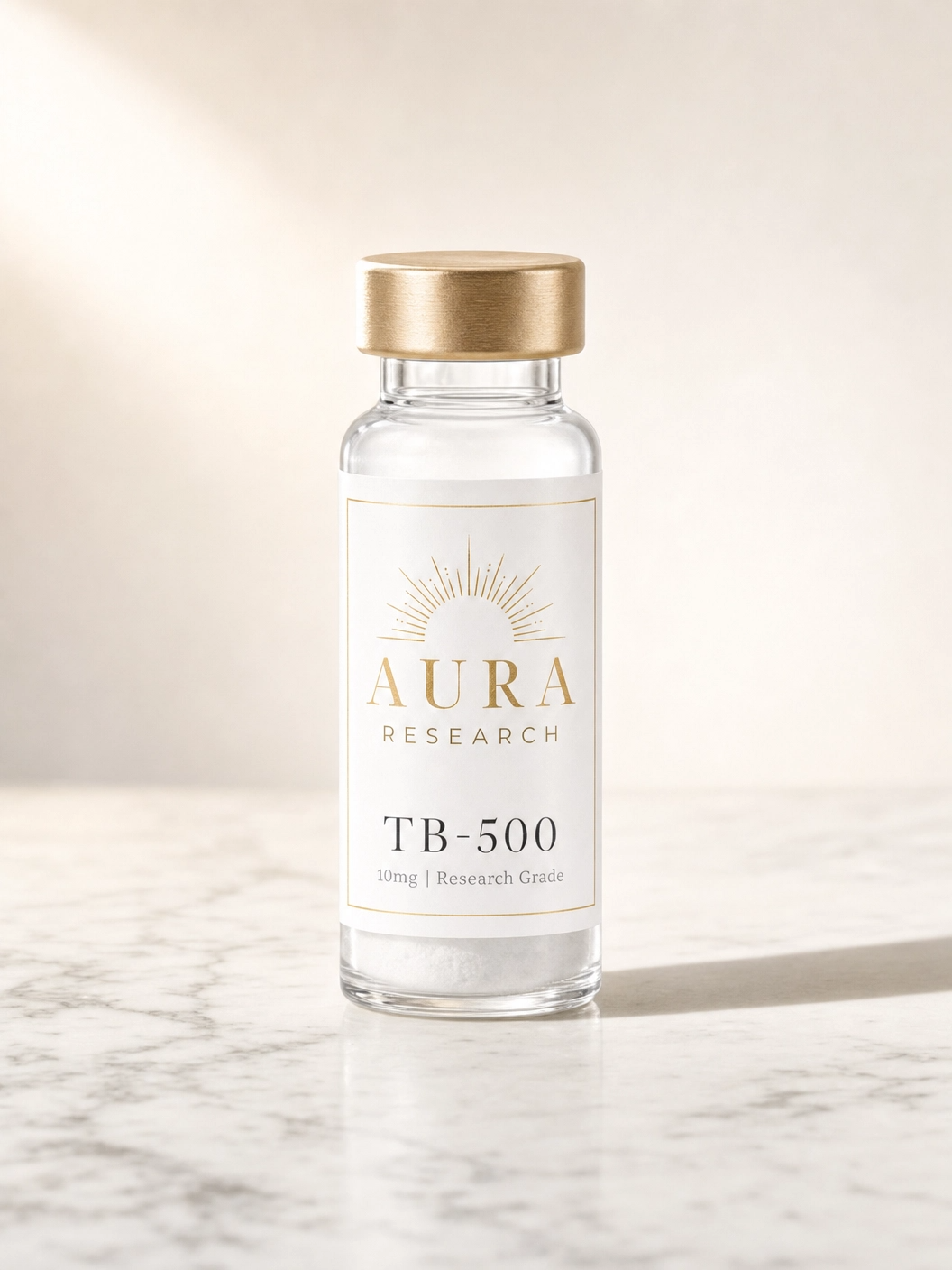
This is why reputable suppliers will only ever provide TB-500 in its lyophilized (freeze-dried) powder format, sealed inside a sterile glass vial under a vacuum. This format keeps the peptide completely stable and protected. To ensure scientific accuracy, always look for HPLC-verified compounds with a certified purity rating of over 99%.
Summary: The Recovery Messenger
To wrap up, let us summarize the key facts about TB-500.
TB-500 is a synthetic, seven-amino-acid peptide designed to mimic the active healing site of the natural protein Thymosin Beta-4 [1]. It works by managing cellular actin, promoting the growth of new blood vessels, and calming chronic inflammatory pathways like NF-κB [2]. Preclinical and clinical studies have shown its impressive potential for accelerating the repair of muscles, tendons, eyes, and even damaged heart tissue [3].
While it remains classified as an experimental research chemical in the UK and is not approved for human consumption, it stands as one of the most exciting frontiers in modern regenerative medicine.
If you want to go deeper into the specific science of other repair peptides, or explore how researchers pair TB-500 with BPC-157 in laboratory settings, visit the Aura Academy for our full collection of educational guides.
References
1.Xing, Y., Ye, Y., Zuo, H., & Li, Y. (2021). Progress on the Function and Application of Thymosin β4. Frontiers in Endocrinology, 12, 767785. https://pmc.ncbi.nlm.nih.gov/articles/PMC8228050/
2.Hannappel, E. (2007). β-Thymosins. Annals of the New York Academy of Sciences, 1112(1), 21-37. https://en.wikipedia.org/wiki/Thymosin_beta-4
3.Bock-Marquette, I., Maar, K., Maar, S., Hetenyi, R., Faskerti, G., Hanna, D., Lippai, B., & Takatsy, A. (2023). Thymosin beta-4 denotes new directions towards developing prosperous anti-aging regenerative therapies. International Immunopharmacology, 116, 109741. https://pmc.ncbi.nlm.nih.gov/articles/PMC8228050/
4.Rahaman, K. A., Muresan, R. A., Min, H., et al. (2024). Simultaneous quantification of TB-500 and its metabolites in in-vitro experiments and rats by UHPLC-Q-Exactive orbitrap MS/MS and their screening by wound healing activities in-vitro. Journal of Chromatography B, 1235, 124033.
5.Sosne, G., Dunn, S. P., & Kim, C. (2015). Thymosin β4 significantly improves signs and symptoms of severe dry eye in a phase 2 randomized trial. Cornea, 34(5), 491-496.